 الاعلام و العلاقات الثقافية
The College of Law at Al-Nahrain University discussed a master’s thesis entitled “The Legal Framework of Negative Easements,” submitted by Faiza Faris Ahmed, a postgraduate student in the Department of Private Law.
The study examined the general concept of easement rights under civil law, highlighting the challenges posed by traditional legal rules in regulating these rights, particularly in light of the emergence of new forms of easements, such as environmental and hydropower easements.
The research aimed to examine the adequacy of the general legal rules governing easement rights in regulating negative easements. It concluded that negative easements are fundamentally traditional easements and are therefore subject to the same legal characteristics and principles governing easement rights, including the rules concerning their acquisition. However, negative easements have a particular legal nature, as they cannot be acquired through prescription or by the original owner’s allocation. This is attributable to their concealed and non-apparent nature, as they lack a tangible physical manifestation through which third parties can identify their existence. Consequently, their acquisition should be restricted to legal acts, such as contracts or wills, in order to protect the stability of legal transactions from restrictions of which a new owner or other concerned parties may be unaware.
The study also highlighted that previous research had not extensively addressed hydropower easements, despite their significant role as a form of clean and sustainable energy. Such energy contributes to reducing environmental pollution and minimizing reliance on fossil fuel sources.
Small-scale hydropower is considered one of the forms falling within the scope of negative easements, as it requires refraining from any action that may obstruct the flow of water to the turbine, thereby ensuring the effective utilization of this energy source.
Furthermore, the research addressed another distinct type of negative easement, namely environmental protection easements, which possess particular characteristics that distinguish them from other easements. Their distinctive nature stems from their complex legal framework, which encompasses both public and private law. These easements aim to protect the environment in the public interest rather than serve an exclusively private interest. Accordingly, they require a specific legal framework within private law, while retaining the fundamental characteristics of traditional easement rights.
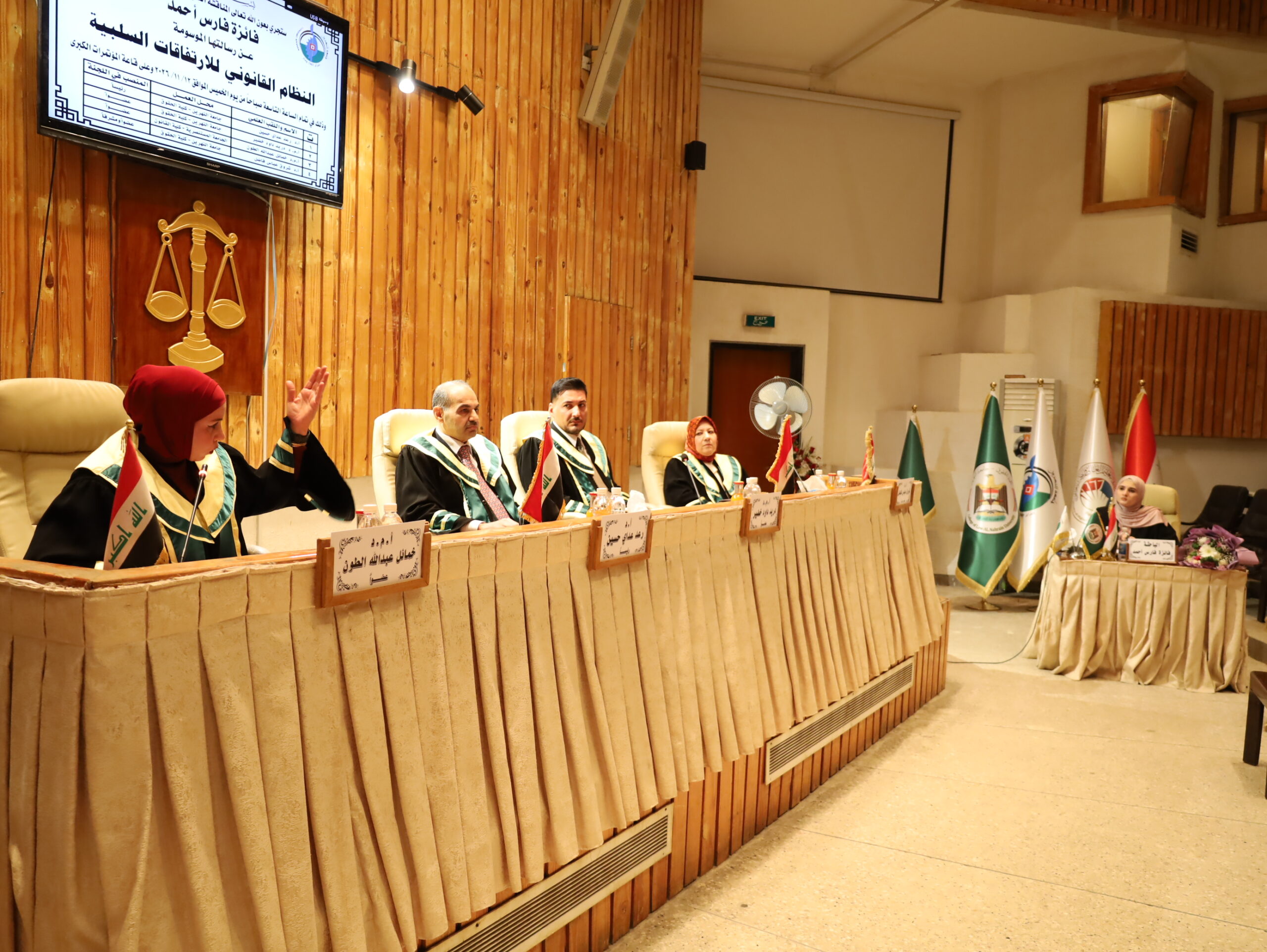
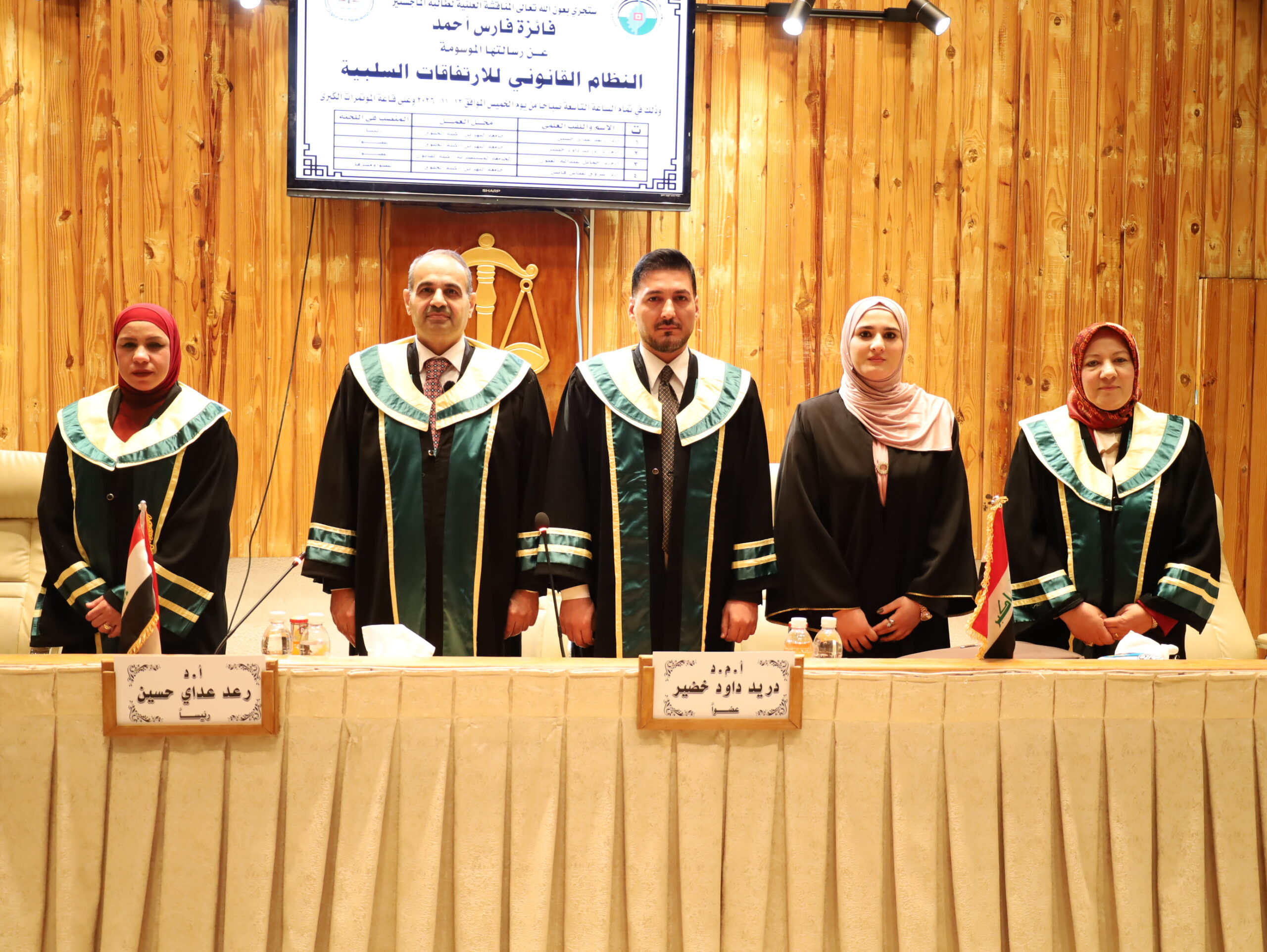
The discussion committee consisted of:
Prof. Dr. Raad Adai Hussein – Chairperson.
Assist. Prof. Dr. Duraid Dawood Khudhair – Member.
Assist. Prof. Khamail Abdullah Al-Toun – Member.
Prof. Dr. Shorouq Abbas Fadhil – Supervisor.
Following an extensive academic discussion, the committee decided to accept the thesis subject to minor amendments and recommended awarding the student a Master’s degree in Private Law.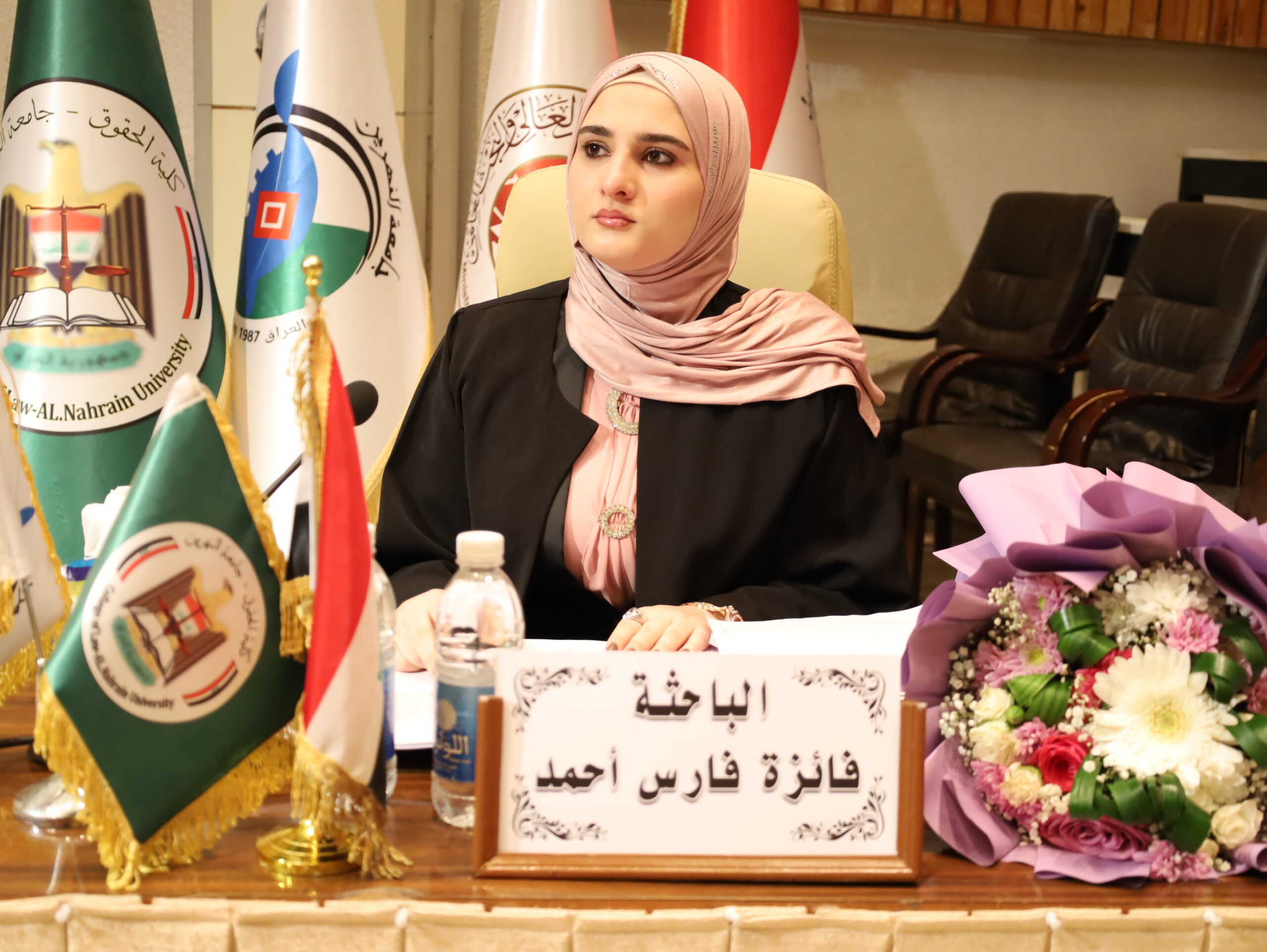
#Nahrain_Law_Media
